Metals: the transition faces its limits
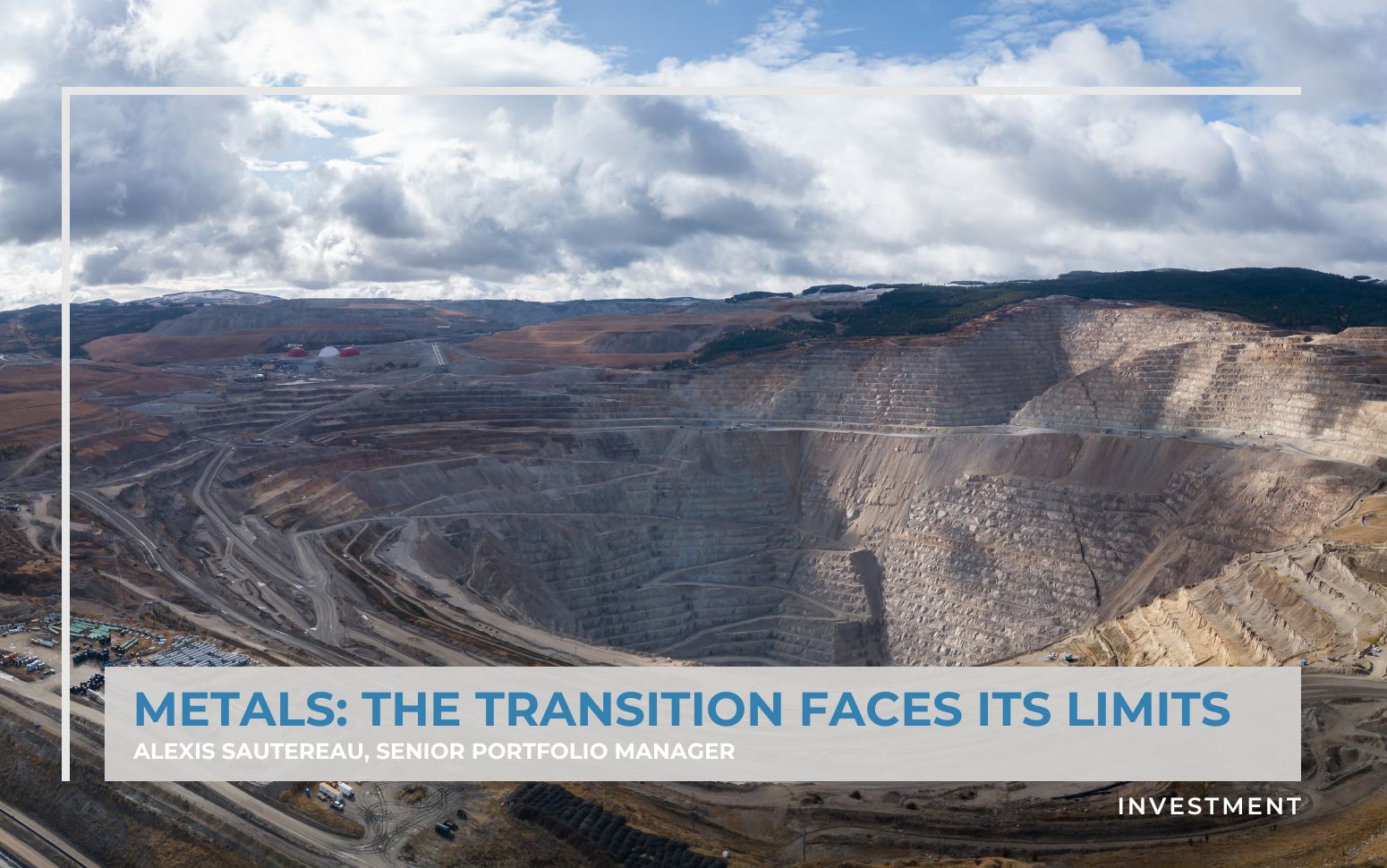
The depletion of deposits and the explosion in demand make the energy transition equation almost impossible to solve.
An increasingly voracious appetite for energy
Energy adaptation requires a dramatic increase in the consumption of base metals. Copper, zinc, nickel and cobalt are the invisible pillars of contemporary technologies such as electric vehicles, wind turbines, solar panels, smart grid infrastructure and the massive data centres needed to deploy artificial intelligence. The latter, whose rapid growth requires exponential computing power, is driving global electricity demand to unprecedented heights. Yet, at the very moment when humanity needs it most, the mining industry faces a devastating paradox: deposits are becoming depleted while demand is skyrocketing.
Deposits that are inexorably becoming depleted
The data illustrates the scale of the challenge. For example, the average copper content of mines in Chile, the world’s leading producer, has fallen from 1% in the 1990s to around 0.6% today. This deterioration means that almost twice as much rock now has to be crushed to extract a tonne of red metal.
The phenomenon affects all strategic metals. Indonesian nickel mines now exploit low-grade laterites, while African cobalt deposits present increasing geological complexities. This deterioration is not cyclical, but structural: humanity naturally began by exploiting the richest and most accessible deposits and now has to work harder for poorer results.
New mines, an illusory solution
Faced with this reality, opening new mines seems to be the most obvious solution. In theory, the Earth’s crust contains enough metals to last for several centuries, and exploration technologies make it possible to identify deposits that are deep or located in previously inaccessible areas.
Several flagship projects, from the Kamoa-Kakula mine in the Democratic Republic of Congo to the Andean copper and nickel deposits in New Caledonia, promise massive production.
But the operational reality is quite different: it takes an average of more than fifteen years between the discovery of a deposit and its entry into production. In fact, geological studies, environmental assessments, negotiations with local communities and initial investments (often running into billions of dollars) slow down the process considerably. Fifteen years to meet an urgent need: that is the paradox of industrial planning.
When society says no to mining
Furthermore, mining development is increasingly facing social and environmental resistance. Local populations oppose projects that threaten their water resources, agricultural land or cultural sites. Indeed, the communities concerned often prefer drinking water to promises of economic development.
As a result, the Tía María project in Peru, the Pebble project in Alaska and the Montagne d’Or project in French Guiana have all been blocked by citizen protests. In addition, regulatory requirements are becoming stricter, imposing more stringent standards for effluent treatment and waste management. These legitimate constraints increase costs and lengthen lead times.
Energy, the Achilles heel of mining production
Mining already accounts for around 8% of global energy consumption. And this proportion is increasing as ore grades decline, because processing twice as much ore requires twice as much energy.
Some estimates suggest that the energy cost of copper production could double by 2040, undermining some of the climate benefits of transport electrification.
Ironically, we are consuming more energy to produce the metals that are supposed to free us from it.
Innovation and recycling as safety valves
Fortunately, artificial intelligence is now improving the accuracy of geological exploration. In addition, in situ leaching processes are reducing the need for excavation, while recycling is advancing, with recovery rates approaching 50% for copper.
The circular economy could therefore provide up to 30% of the future supply of certain critical metals. But we must be clear-headed: even combining these advances, supply will remain below rapidly growing demand.
Changing the paradigm
Clearly, the development of new mines, although essential, will not be enough to offset the continuing decline in mineral grades and the exponential increase in demand.
This impasse therefore requires a complete overhaul of our relationship with resources, demanding greater restraint in product design, longer product lifespans and increased standardisation to promote recycling.
Energy adaptation cannot be achieved without a parallel transition to a truly regenerative economy, where the exploitation of virgin resources becomes the exception rather than the norm.
The challenge remains to convince a civilisation based on perpetual growth to embrace voluntary moderation.
Past performance is not indicative of future results. The views, strategies and financial instruments described in this document may not be suitable for all investors. Opinions expressed are current opinions as of the date(s) appearing in this material only. References to market or composite indices, benchmarks or other measures of relative market performance over a specified period of time are provided for your information only. NS Partners provides no warranty and makes no representation of any kind whatsoever regarding the accuracy and completeness of any data, including financial market data, quotes, research notes or other financial instruments referred to in this document. This document does not constitute an offer or solicitation to any person in any jurisdiction in which such offer or solicitation is not authorized or to any person to whom it would be unlawful to make such offer or solicitation. Any reference in this document to specific securities and issuers are for illustrative purposes only, and should not be interpreted as recommendations to purchase or sell those securities. References in this document to investment funds that have not been registered with the Finma cannot be distributed in or from Switzerland except to certain categories of eligible investors. Some of the entities of the NS Partners group or its clients may hold a position in the financial instruments of any issuer discussed herein, or act as advisor to any such issuer. Additional information is available on request. © NS Partners Group
Article tagged by: